Install Vuze On Synology Quickconnect
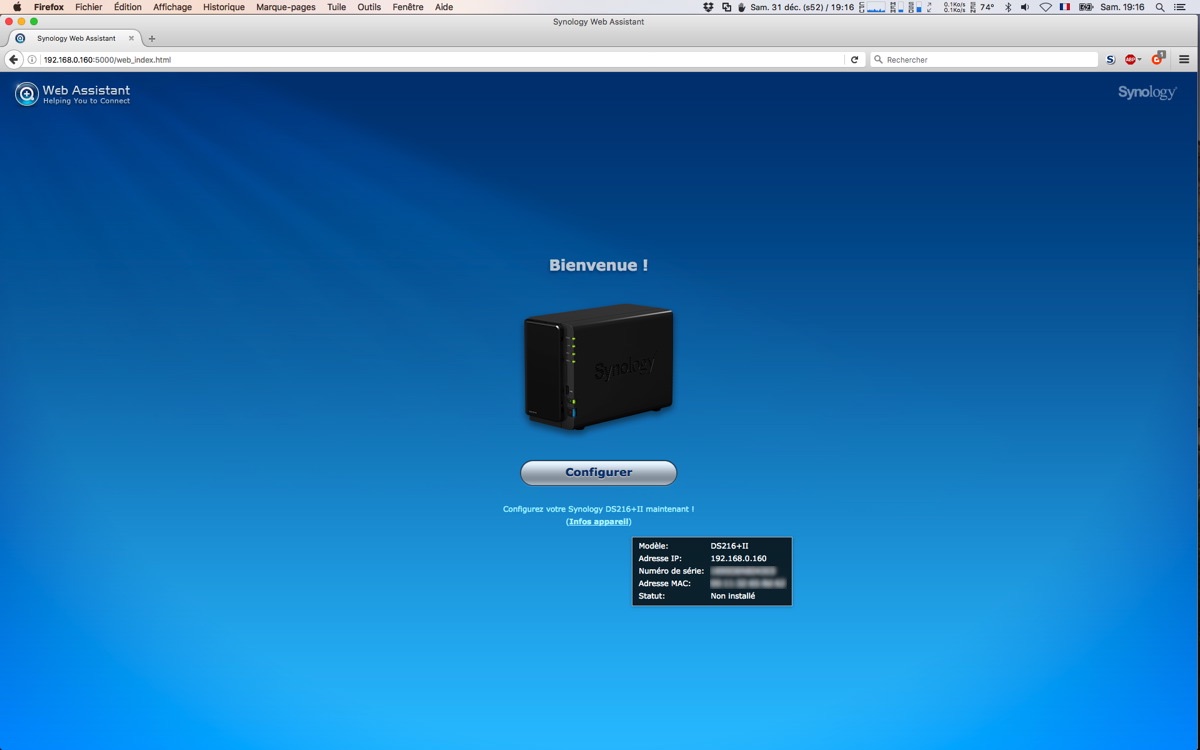
Configure QuickConnect, which allows you to create a Synology account and connect to your NAS without messing with router settings (and when away from home). I will show you here how to backup your Synology in Azure. The first thing you need to do is to create a storage account in Azure. Login in Azure and click on 'New' in the Azure portal: Search by 'storage': and select 'Storage account' Select 'Resource Manager' to create a new resource for the.
The goal of this tutorial is to install vuze headless (as a command line application). Most of the tutorials found on the web suggest to do the configuration of vuze in the UI before starting it in headless mode. Unfortunately, this is not possible on a NAS where you have to X server and no screen. Tutorial tested on IOMEGA Storcenter ix4-200d firmware 3.1.14.995 but uses unsupported features on the hardware. Please use at your own risk. Since Vuze if a java program, the same steps should allow you to install vuze as an headless client on any hardware running java.
Unfortunately, I ran into a lot of JVM crashes with vuze headless and oracle jvm ejre1.7.0 (for ARM). On top of that, vuze is quite an heavy program in terms of CPU and memory usage, which is annoying for the type of hardware we are looking at (like a NAS). Therefore, I don't recommand to install vuze on a NAS. I suggest you look at rtorrent, which is much more reliable (see my tutorial ). SSH into your NAS See my other post: if you have an IOMEGA NAS 2. Download and install Steps adapted from the cd /opt/tmp wget tar wget PATH=$PATH:/opt/bin/ tar -xvf Vuze_4702_linux.tar.bz2 wget tar -xvf commons-cli-1.2-bin.tar.gz mv commons-cli-1.2/commons-cli-1.2.jar vuze/ wget tar -xvf apache-log4j-1.2.16.tar.gz mv apache-log4j-1.2.16/log4j-1.2.16.jar vuze to install java, you can look at the java section of my other post:. The installation is pretty straight forward.
Now, install the webUI plugin: cd vuze cd plugins mkdir webui cd webui wget ipkg-opt install zip ipkg-opt install unzip unzip webui_1.7.0.zip mkdir /opt/var/log/vuze If you don't have ipkg-opt, see my other post: 3. Configure the Vuze installation cd /opt/tmp/ mv vuze /opt/ cd /opt/vuze/ /mnt/pools/A/A0/NAS_Extension/ejre1.7.0/bin/java -Xmx128m -Dazureus.config.path=/opt/vuze/.azureus/ -cp 'Azureus2.jar:commons-cli-1.2.jar:log4j-1.2.16.jar' org.gudy.azureus2.ui.common.Main --ui=console Vuze should now be running, we need to configure it now. Adapt the paths to suit your needs and type at the vuze cli: set 'Default save path' '/mnt/pools/A/A0/torrents/vuze/download' string set 'Use default data dir' true boolean set 'Logger.Enabled' true boolean set 'Logging Enable' true boolean set 'Logging Dir' '/opt/var/log/vuze/' string set 'Ip Filter Autoload File' 'string set Plugin.azhtmlwebui.User myusername set Plugin.azhtmlwebui.Password mypassword password set 'Plugin.azhtmlwebui.Password Enable' true boolean This is installing IP filtering as well. If you don't want that, just skip the set 'Ip Filter Autoload File' command. You are good to go now. To have vuze automatically start at boot, you need to create the script in /etc/init.d (you can adapt the azureus script provided inside the install).
If you have an Iomega NAS, look at to see how to have the program run at boot. You can now connect to the web Vuze UI from your web browser at Please note that the web UI is not as rich as the regular UI (most options are not available in the web UI) Please comment to let me know how stable your install is! Arc macro language.